

 ·
5 minute read
Service robots help healthcare facilities by handling repetitive tasks like delivering supplies, linens, or lab specimens between departments and cleaning long corridors. This gives staff more time to care for patients. Pulse Technology helps healthcare facilities in Illinois, Northwest Indiana, and Southeast Wisconsin choose, integrate, and support Pudu robotic solutions.
Delivering supplies, moving clean linens, and cleaning floors are all part of keeping a healthcare facility ready for patients. For the people doing that work, even a short trip between departments adds up over a shift.
At OSF Saint Anthony’s Health Center in Alton, Illinois, a robot named Dwight handles some of those trips. In July 2024, the hospital reported that Dwight was making about 50 trips a day. He carries laboratory specimens from the emergency department on the ground floor to the lab one floor up, and he calls the elevator on his own. Staff no longer leave the emergency department to make those deliveries, and Dwight was still on the job at the hospital’s centennial open house in October 2025.
Dwight is one example of what’s possible when a facility finds the right task for a robot. At Pulse Technology, we carry Pudu’s commercial robots and help healthcare facilities across Illinois, Northwest Indiana, and Southeast Wisconsin find where robotics can make a similar difference for their teams. We’re also a Managed IT and cybersecurity provider, so we support the network, security, and integration side of a deployment, not just the robot.
Key Takeaways
- Service robots can handle certain deliveries and floor-cleaning tasks, freeing staff for other responsibilities.
- The right fit depends on the work, building layout, traffic, and the robot’s capabilities.
- Connected robots rely on your network and building systems, so IT should be part of the plan from the start.
- Medication and specimen transport involve additional handling and security requirements.
- Starting with one task lets your team evaluate results before expanding.
What Can Service Robots Do in Healthcare?
Service robots handle physical tasks, such as transporting items between locations or cleaning a designated floor area. Our robots cover delivery, material transport, floor cleaning, and visitor information services.
A hospital might automate a regular delivery route between departments. A rehabilitation facility might assign a robot to long corridors. A senior care community might send meals from the kitchen to a collection point near a dining area. Each setting has its own requirements; we start every conversation by looking at how the work happens today.
How Can Robots Help With Deliveries?
Think about something your team regularly carries through the building: clean linens, general supplies, meals, or equipment. Who makes that trip? How often? What do they stop doing to complete it?
The walking is only part of it. Staff collect items, wait for elevators, find the recipient, and return to their work area. Repeat that several times a shift, and a routine delivery becomes a sizable responsibility.
A delivery robot can handle the trip between designated locations. For example, staff load clean linens at central supply and send the robot to a collection point, where someone receives them. People still manage both ends of the process. They load the right items, secure them, confirm arrival, and step in if the robot can’t finish the route.
Medication and specimen transport call for a closer review. Your clinical and compliance teams should evaluate packaging, transport conditions, access controls, and handoffs before deciding whether a solution is suitable.
Where Do Floor-Cleaning Robots Make Sense?
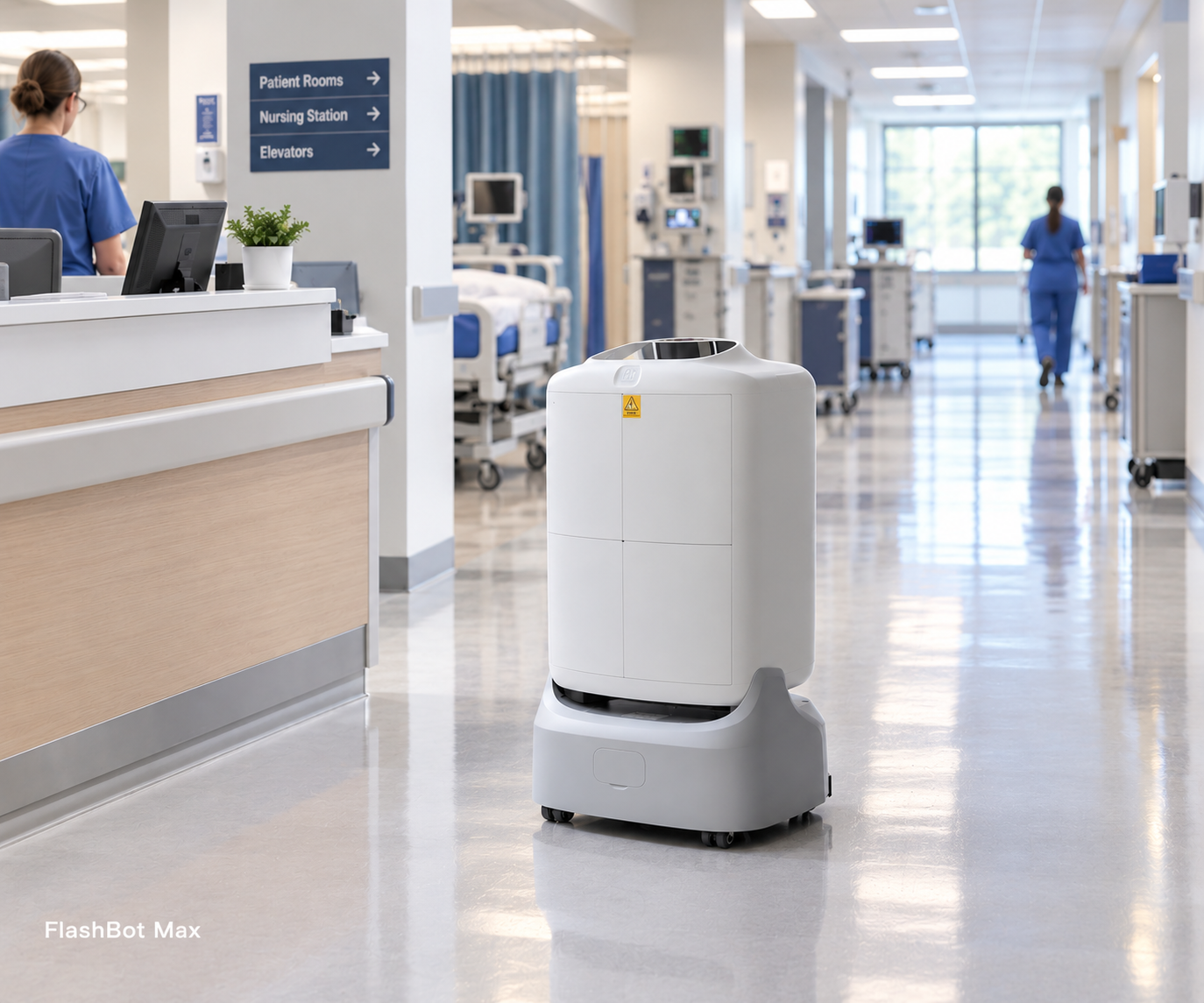
Long corridors, lobbies, and other open floor areas take considerable time to clean. They also often have enough space for a robot to follow an assigned route.
Pudu’s cleaning robots are built for different jobs. For example, the CC1 combines sweeping, scrubbing, vacuuming, and mopping, and can vacuum carpet with an optional attachment. We’ll help you match the machine to your floor surfaces and the work you want done.
Picture a cleaning team responsible for a large corridor plus detailed cleaning in nearby rooms. A robot works the corridor while staff focus on the rooms, edges, tight spaces, spills, and surfaces outside its assigned task.
In healthcare, one point deserves emphasis. A robot that scrubs or vacuums floors does not automatically meet disinfection or infection-prevention requirements. Its role should be reviewed as part of your facility’s approved cleaning program.
How Pulse Helps You Evaluate the Fit
A demonstration shows you how a robot works. Seeing it perform in your building shows you whether it fits. That’s where our evaluation starts.
Walking the route. We walk the proposed route with the people who use it every day. We look at doorways, corners, elevators, ramps, collection points, and places where equipment tends to gather. We also consider timing. A corridor that’s quiet early in the morning may be busy with patients, visitors, wheelchairs, and carts by midday.
Reviewing the technology. A robot is also a connected device, and it needs the same planning as any other technology on your network. Most depend on reliable wireless coverage, management software, regular updates, and, for elevators or controlled doors, connections to building systems. As a Managed IT and cybersecurity provider, we can assess your network, secure access to the robot’s platform, and handle questions about updates and data, so your IT department isn’t sorting it out alone.
Listening to your staff. Frontline staff know where deliveries get delayed and which spaces get crowded. Their input reveals issues a brief walkthrough would miss, and it helps build buy-in before the robot arrives.
How Can You Tell Whether a Robot Is Helping?
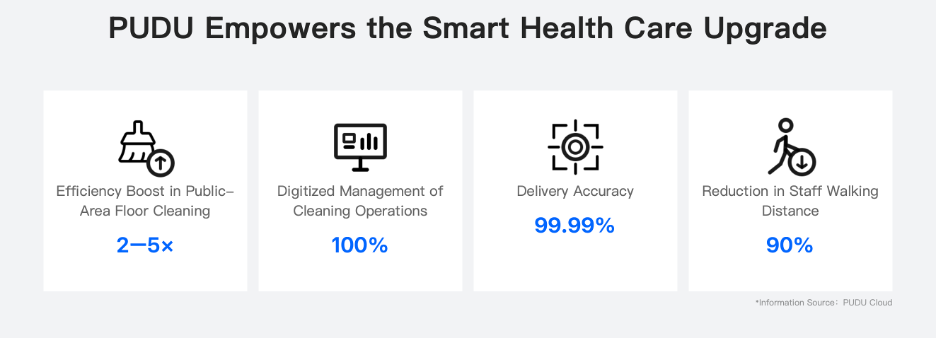
Start with one task and decide what you want to improve. For a delivery route, record how many trips staff make and how long they take. For cleaning, note the floor area, the time involved, and other work waiting for attention. Then compare that with what happens during a trial.
Does the robot complete the task consistently? How much time do people spend loading, unloading, checking routes, cleaning the machine, or troubleshooting? Can they put the time saved toward other work?
Weigh the full cost as well: the robot, deployment, software, training, maintenance, and support. We’ll help you build that picture so your team can say clearly what improved and whether the result justifies the investment.
Planning for Your Team
Before a robot goes into service, everyone should know their role. Who loads deliveries and receives them? Who prepares cleaning areas and checks the results? Who responds when the robot stops?
We provide training on the assigned task, routine care, common problems, and when to call for support. Staff get time to practice before relying on the robot during a busy shift. We also recommend keeping a backup process in place for when the robot is unavailable.
After deployment, you have a local partner for maintenance, software updates, and parts. As a family-owned company that has served the region for more than 70 years, we’re here for the long run.
Next Steps: Start With One Task
If you’re curious about healthcare robotics, start with a recurring task your team knows well. It could be a delivery between departments or a floor area that takes considerable time to clean. Talk with the people doing that work about where time goes and what they’d focus on if a robot handled part of it.
Then give us a call. We will help you evaluate the task, the facility, and the technology involved so you can decide with confidence where robotics fits.
Contact our team at Pulse Technology to discuss the possibilities for your facility.
Frequently Asked Questions
Can service robots work around patients and visitors?
Certain models use navigation and obstacle-detection systems to move through shared spaces. The proposed route still needs review and testing, with attention to traffic, accessibility, and available space.
Can delivery robots use elevators and secured doors?
Some models support integration with elevators and access systems. Compatibility with your building, installation requirements, and permissions should be confirmed before choosing a solution.
Does Pulse Technology support the IT side of a robotics deployment?
Yes. As a Managed IT and cybersecurity provider, Pulse can assess network coverage, plan secure access to management software, and support integration with your existing systems.