
AI and Automation: What They Mean for IT Management in the Modern Office
In our role as technology providers for equipment including copiers and printers, as well as for full IT services, you might say we have a ringside seat to just how rapidly office technology is changing – and how to help businesses take advantage of the latest that technology has to offer. Businesses today rely on far more than just computers and printers. Their businesses depend on cloud platforms, mobile access, document workflows, cybersecurity tools, and connected devices working together seamlessly. While managing all of that through traditional, manual IT has been the order of business for years, there are newer, enhanced options available.
This is where Artificial Intelligence (AI) and automation come into play – as practical add-on tools that transform IT management by helping businesses run more efficiently, securely and predictably.
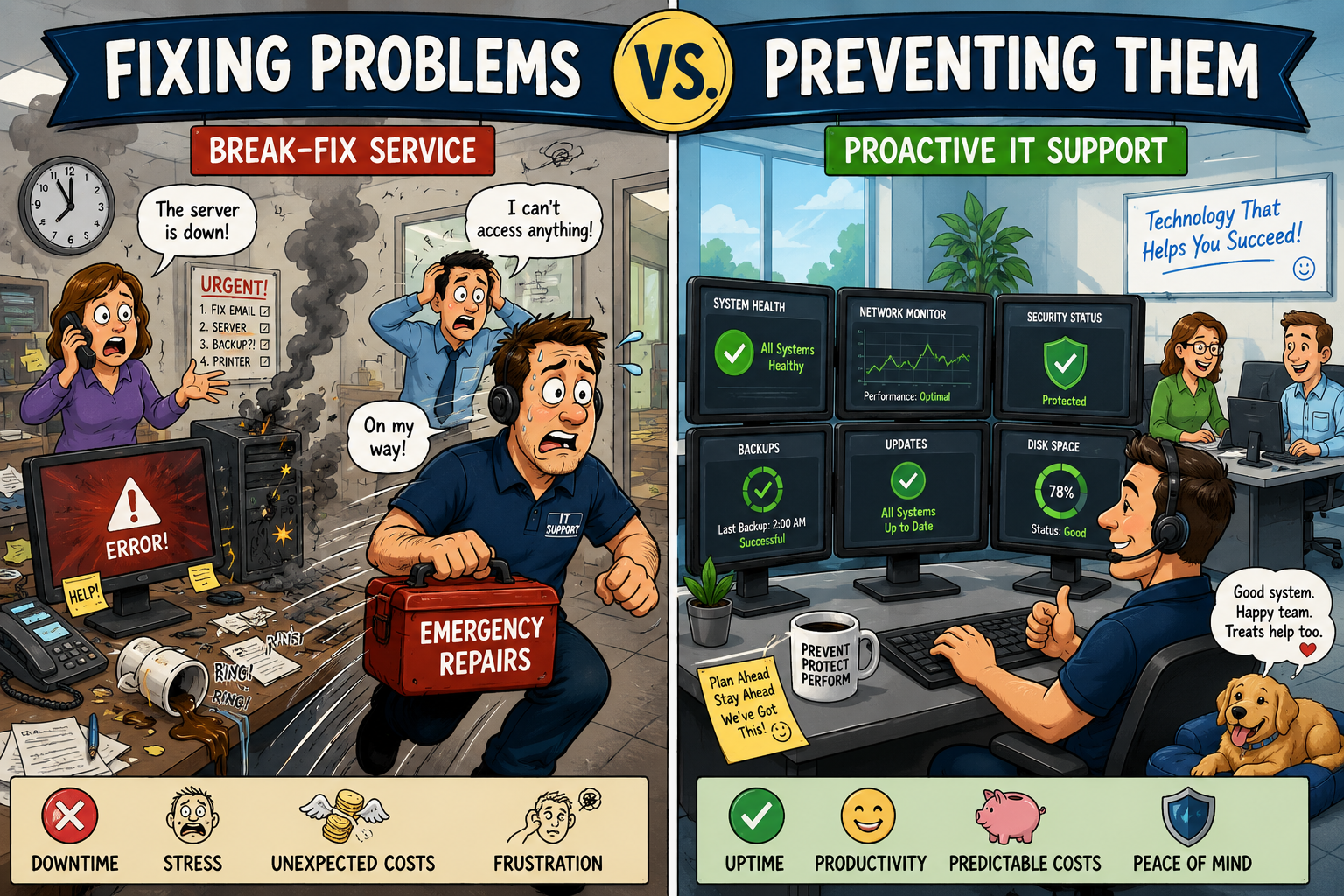
Moving away from the break-fix model
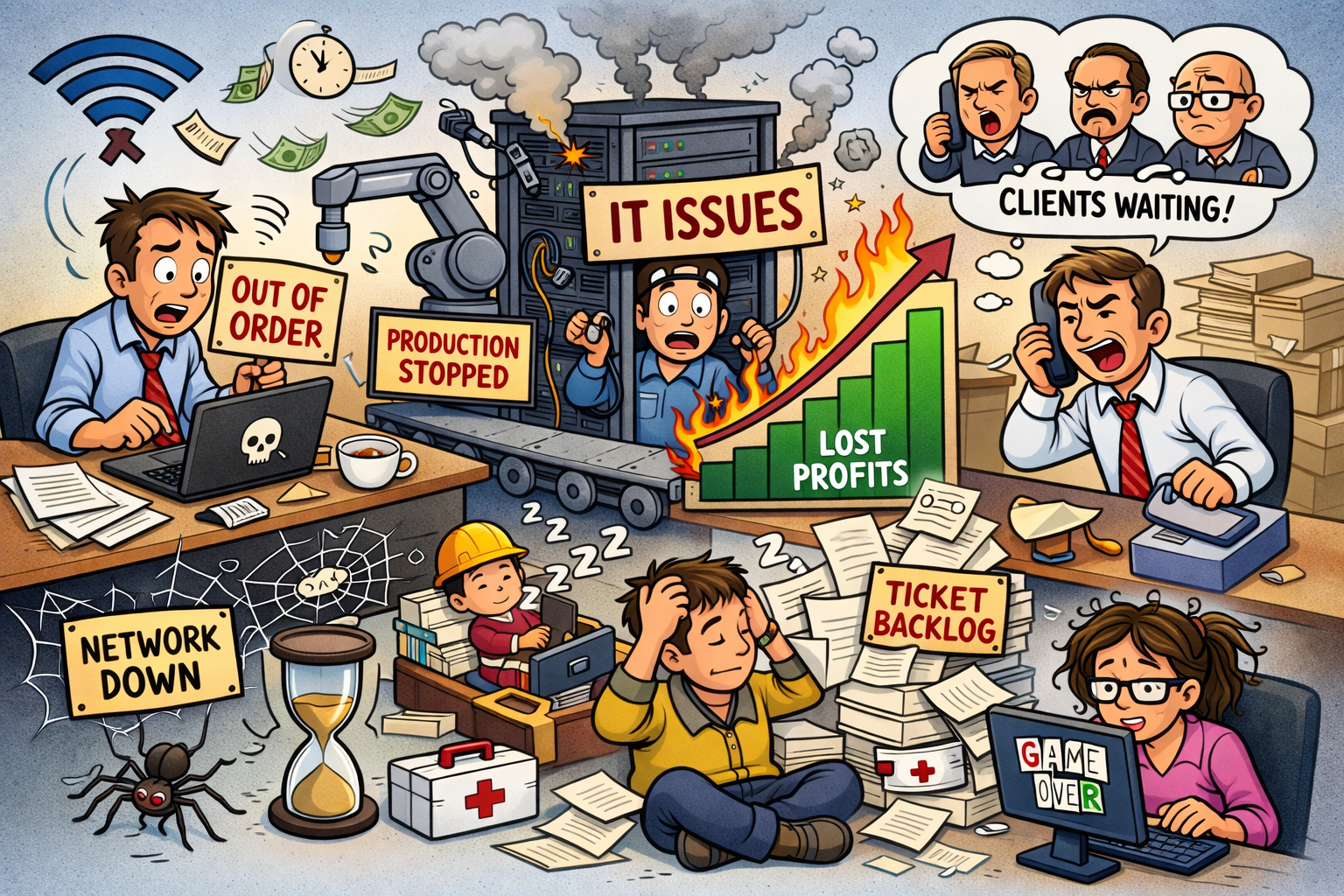
For many organizations, whether they handle IT internally or outsource it to a trusted partner, the management of IT is often reactive rather than proactive. IT responds when a computer freezes up, a device fails, a network slows down, or a security issue comes to the surface.
The introduction of AI into the IT process allows the IT team to shift its stance away from reacting to problems and instead look toward strategies to anticipate and mitigate them.
Monitoring platforms powered by AI allows analysis of system performance, network traffic, device behavior, and security activity. In this way, rather than waiting for something to fail, these tools can quickly identify patterns that suggest a problem may be developing – and sometimes they can do so days or even weeks before a problem becomes a problem.
For the business owner, benefits include fewer unexpected outages, reduced levels of downtime, less disruption to employees and customers, and more stable day-to-day operations. There is higher reliability and fewer emergency service calls.
Automation will handle the repetitive tasks
Within the management of most company’s IT needs, there are numerous routine tasks handled regularly – and many do not necessarily require “hands on attention.” The introduction of automation can free up the time of IT personnel to concentrate on more pressing matters. Tasks that can be effectively automated include software updates and security patching, user account setup and removal, device configuration for new hires, password resets, and backup verification and reporting.
This automation is enabled by software platforms: software-driven workflows that connect systems, enforce rules, and carry out tasks automatically, based on defined conditions. The automation software program watches for an event (such as a new hire, a security risk appears, or a device comes online), and follows pre-defined rules, executes tasks automatically and alerts IT (the humans!) only if something needs human attention.
Automation takes out the human error component; the system doesn’t need to rely upon someone to remember all these tasks. For the business, this means lower support costs, faster onboarding, and fewer preventable problems.
AI and automation provide smarter security
Security is one of the biggest concerns for business owners. Today’s threats are more advanced, more automated, more persistent and more sophisticated. At the same time, the modern office includes more endpoints: laptops, mobile devices, printers, scanners, and cloud applications.The AI advantage in modern cybersecurity is that it analyzes behavior rather than relying solely on known threats. So, instead of asking “Is this a known virus,” AI-driven security tools “ask their own questions” including:
- Is this behavior unusual for this user or device?
- Is this access pattern abnormal for this time or location?
- Does this activity resemble known attack behavior—even if it’s new?
This AI-enhanced approach is important for devices that are often overlooked, such as multifunction printers. MFPs store data, connect to networks, and process sensitive documents—making them attractive targets if left unprotected.
Automation then allows security systems to respond instantly, isolating devices or blocking access before an issue becomes a breach.Data-driven IT decisions, not guesswork
AI can analyze trends across a number of business operations, including device usage, network performance, application adoption, and print and document workflows, to name several.
AI-enhanced analysis can help business owners understand if they are paying for systems they don’t use, where are the bottlenecks that slow down production, when is it time to upgrade or scale back, and how can workflows be simplified or automated. Used properly, AI takes the guesswork out of IT planning.
Supporting Hybrid and Remote Work Securely
Covid-19 changed our work environment significantly. Today’s workforce is more mobile and hybrid, with employees working from the office, from home, or multiple locations – often using the same systems and data.
AI and automation help IT teams maintain security and consistency across this complex environment by monitoring remote devices for unusual activity, automating secure access controls, and providing faster automated help-desk support. The business is protected, and employees can do their work without overwhelming internal IT resources.
What this can mean for your business
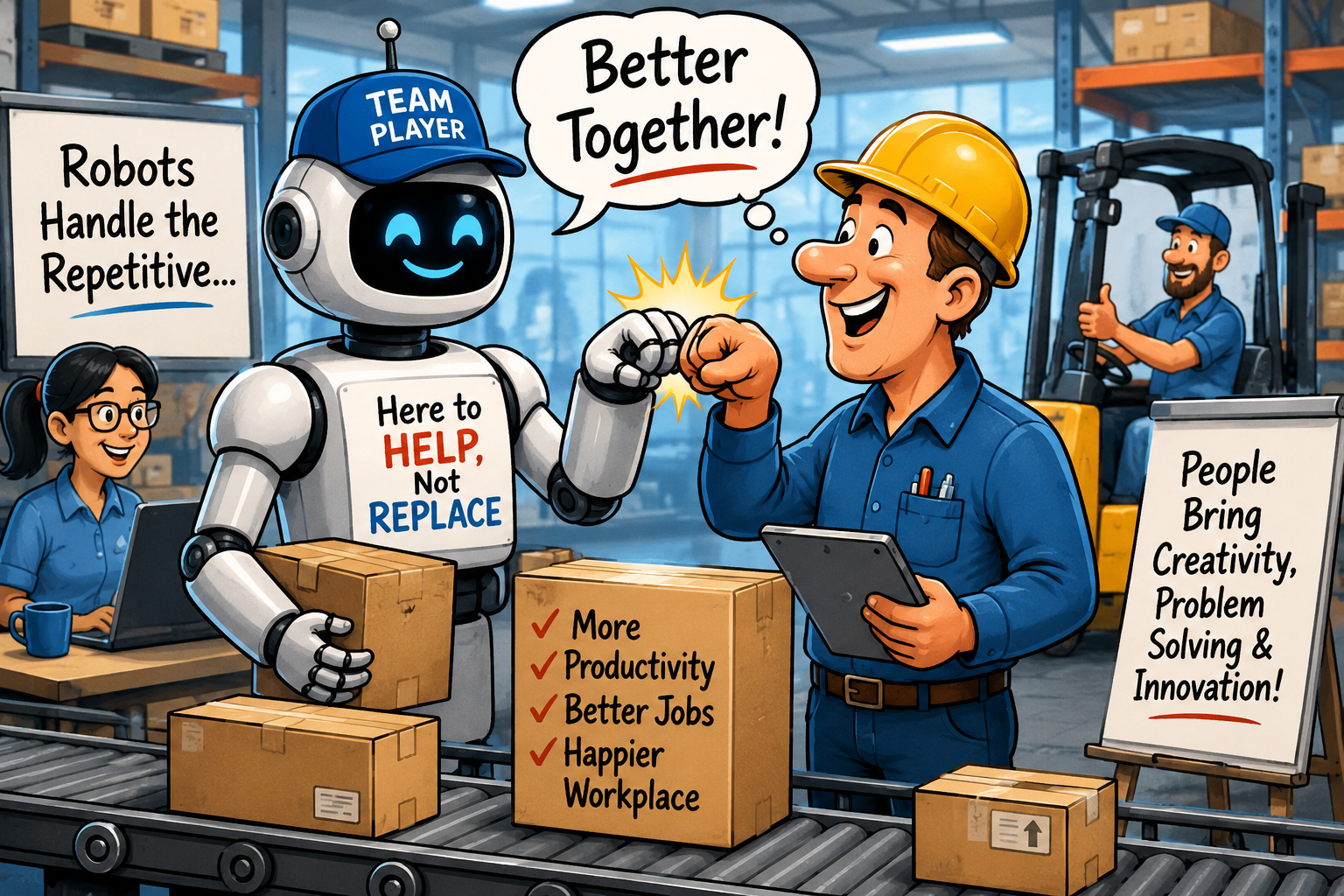
AI and automation should not be viewed as a means to replace people or make IT impersonal. Instead, these should be viewed as tools which make technology work more reliably in the background, so your team can focus on running the business.
For businesses, benefits typically include fewer IT emergencies, stronger security posture, more predictable technology costs, faster support and response times, and better alignment between technology and business goals.
Modern office environments have greater IT needs than ever. Fortunately, the tools available today – coupled with the advantages that IT and automation can bring – are here to meet the demand. AI and automation can allow a business to move beyond “reacting to” potential problems toward a more proactive, strategic approach to technology.
That’s where we come in. With seven decades’ experience, our role is to make sense of how the new technology works and help you to incorporate into your business. AI is a powerful tool, but the recipe for success is being certain that the software that drives it is properly configured and managed.
If you are looking at your IT needs in this new year and wondering what you should do to improve it, then let’s have a conversation. Please give us a call at 888-357-4277 or visit https://pulsetechnology.com. We are here to help. Let’s talk!