
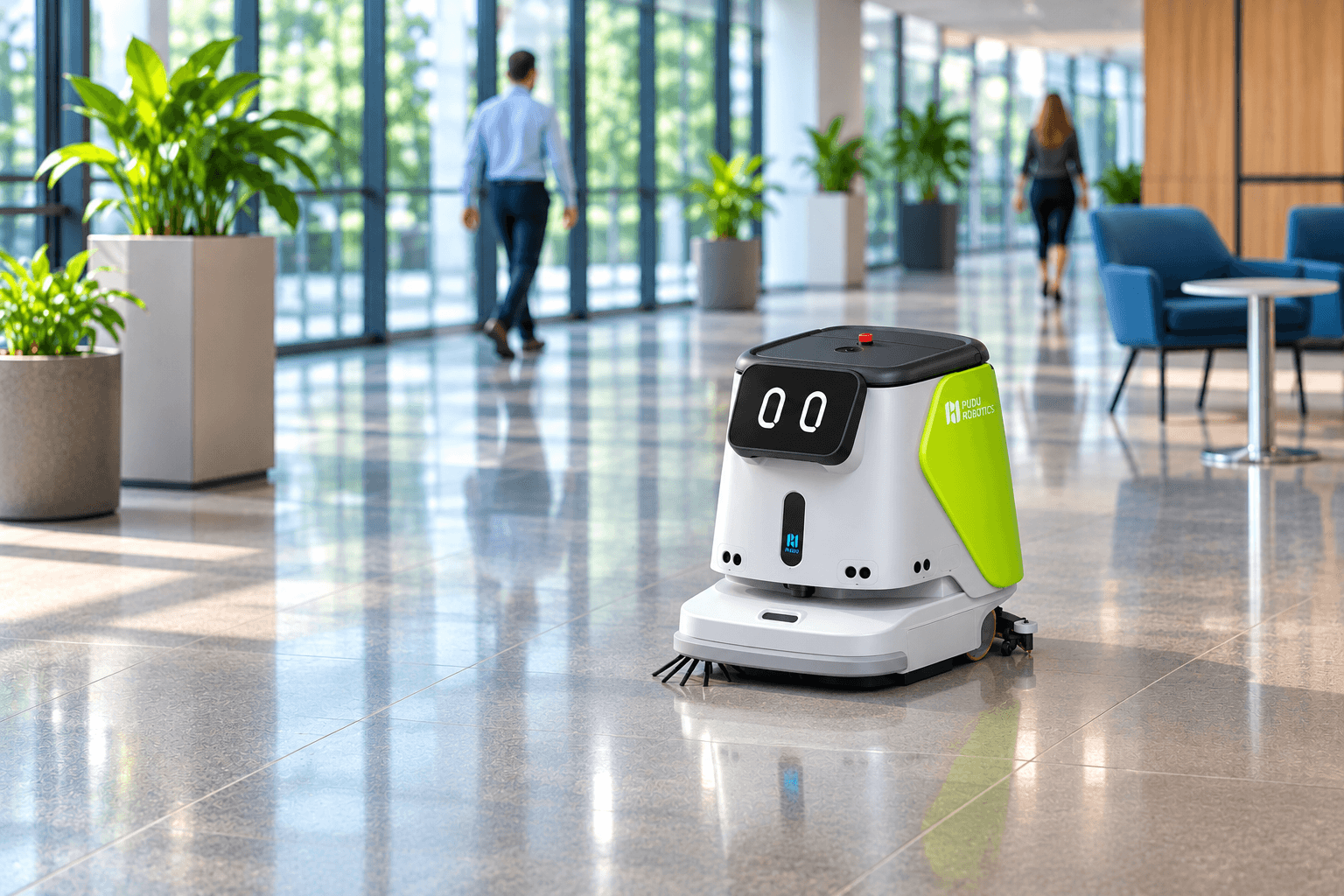
Workplace robotics uses commercial robots to automate tasks such as floor cleaning, material handling, and supply delivery. Industries across healthcare, manufacturing, education, and hospitality use these robots. Common misconceptions about cost, safety, complexity, and job replacement can prevent businesses from exploring the benefits of robotics.
When you hear the word “robot,” what comes to mind?
A futuristic machine replacing workers? Complicated equipment reserved for large manufacturers? Technology that’s too expensive for your business?
But there’s a lot more to workplace robotics than these common assumptions suggest.
Today’s workplace robots clean commercial floors, deliver supplies in healthcare facilities, and transport materials through warehouses. They’re designed to handle tasks that businesses already perform.
Yet misconceptions about cost, complexity, and job replacement still keep organizations from exploring the possibilities.
At Pulse Technology, we help businesses throughout Illinois, Northwest Indiana, and Southeast Wisconsin explore how robotics can support their teams.
Let’s separate five common myths from what’s happening with workplace robotics today.
Key Takeaways
- Workplace robots can support employees by handling repetitive tasks.
- Robotics extends beyond manufacturing into healthcare, education, hospitality, and commercial facilities.
- The value depends on task frequency, equipment costs, and measurable benefits.
- Successful implementation requires planning, training, and support.
- Commercial robots can navigate shared environments, but you must evaluate safety requirements.
Myth #1: Robots Are Going to Replace Human Workers
Reality: Workplace robots can support employees rather than replace them.
One of the biggest concerns surrounding robotics is what happens to the people currently performing those tasks.
It’s a reasonable question. If a robot can clean floors or transport supplies, what does that mean for the employee who previously handled that work?
In many workplaces, robots take on repetitive, physically demanding, or time-consuming tasks while employees continue handling responsibilities that require human judgment and interaction.
Consider a hospital.
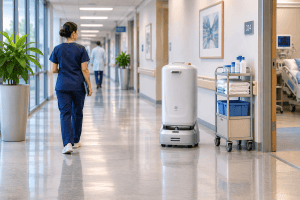
Staff members regularly transport linens, supplies, and other materials between departments. These trips take time away from responsibilities that require their attention.
An autonomous delivery robot can transport appropriate items along designated routes, allowing staff to spend more time on patient care and other duties.
Similarly, a commercial cleaning robot can scrub large floor areas while custodial employees handle detailed cleaning, spills, and areas requiring special attention.
Robotics can also help businesses experiencing staffing challenges.
Successful adoption involves communicating with employees, providing training, and identifying how robots can support them in their current roles.
The takeaway: Robots can complement your workforce by handling suitable repetitive tasks, giving employees more time for responsibilities that benefit from human skills.
Myth #2: Workplace Robotics Is Only for Large Manufacturers
Reality: Commercial robots are already being used by businesses of different sizes across a range of industries.
Industrial robots have been used in manufacturing facilities for decades. That history helps explain why many people still associate robotics with automotive assembly lines and large production facilities.
Manufacturing remains an important application, but today’s robots extend well beyond the factory floor.
Where Are Businesses Using Robots?
- Healthcare: Transporting supplies and cleaning floors.
- Education: Maintaining hallways, cafeterias, and other high-traffic spaces.
- Warehousing: Moving materials between storage areas and workstations.
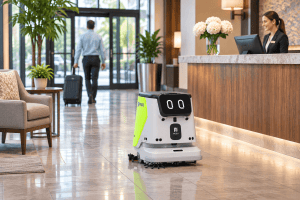
- Hospitality: Delivering food and supporting cleaning teams.
- Commercial offices: Vacuuming, sweeping, and scrubbing common areas.
- Property management: Maintaining floors across large commercial buildings.
A school district, for example, might explore autonomous cleaning equipment to help maintain long hallways and common areas.
A distribution facility might consider a material-handling robot to reduce the number of trips employees make moving goods.
The appropriate application depends on the facility and tasks involved, not simply the organization’s size.
The takeaway: Workplace robotics isn’t limited to large manufacturers. Businesses in healthcare, education, hospitality, and other industries can use robots to handle repetitive tasks such as cleaning, delivering supplies, and moving materials.
Myth #3: Workplace Robots Are Too Expensive for Smaller Businesses
Reality: Robotics requires an investment, but the value depends on the work being performed.
It’s easy to assume commercial robots carry an enormous price tag.
While some industrial systems require substantial investment, commercial cleaning and delivery robots offer different capabilities and cost structures.
The important question isn’t simply how much a robot costs. It’s what the equipment could help your business accomplish over time.
Consider a commercial facility requiring several hours of floor cleaning every day.
A robotic floor scrubber might handle suitable open areas on a schedule, allowing employees to focus on detailed cleaning and other responsibilities.
To evaluate the potential return, businesses should consider:
- Labor time: How many hours are spent performing the task?
- Frequency: Does the work happen daily or occasionally?
- Coverage: How much of the task can the robot complete?
- Equipment costs: What are the purchase or financing expenses?
- Ongoing expenses: What will maintenance, supplies, and support cost?
- Expected benefits: Could the equipment improve consistency or reduce repetitive work?
Not every task makes financial sense to automate.
A small office with limited floor space may have little reason to purchase an autonomous scrubber. A larger facility with extensive corridors and regular cleaning requirements may present a stronger business case.
Pulse Technology offers resources such as its Cleaning Cost Audit to help businesses evaluate potential savings.
The takeaway: Evaluate robotics based on measurable business requirements and total ownership costs, not assumptions about the initial price.
Myth #4: Robots Are Complicated to Install and Maintain
Reality: Modern commercial robots are designed for practical workplace applications, although planning and support remain important.
Businesses may worry about setup complexity, whether robots will work in their existing space, and how much employee training they’ll need.
For many commercial applications, implementation is more manageable.
Modern autonomous mobile robots may use sensors, cameras, mapping technology, and navigation software to move through designated areas.
Depending on the model, robots can follow scheduled cleaning routes, transport materials between destinations, or return to charging stations.
However, businesses still need to ensure the equipment suits their facility and the tasks they want it to perform.
A cleaning robot needs appropriate floor surfaces, sufficient clearance, and access to its assigned areas.
A delivery robot may require designated pickup and drop-off points, suitable pathways, and integration with building systems.
Network connectivity, software updates, maintenance, and employee training may also be necessary.
What Does Implementation Involve?
A typical deployment includes:
- Facility assessment: Identify suitable routes, surfaces, and obstacles.
- Equipment selection: Match the robot to the intended task.
- Setup and testing: Configure routes, schedules, and safety settings.
- Employee training: Explain how to interact with the equipment.
- Ongoing support: Maintain equipment and adjust settings when necessary.
Working with an experienced technology provider can help businesses identify potential problems before purchasing equipment.
The takeaway: Workplace robots aren’t necessarily difficult to introduce, but proper planning, training, and support make a difference.
Myth #5: Robots Can’t Safely Work Alongside People
Reality: Many commercial robots are designed to navigate shared environments, but safe deployment requires appropriate safeguards.
Unlike traditional industrial robots that may operate inside restricted areas, many commercial robots are designed to move through workplaces where people are present.
Autonomous mobile robots can use navigation systems and obstacle-detection technology to identify objects and adjust their movements.
For example, a delivery robot moving through a healthcare corridor may detect someone in its path and slow down, stop, or navigate around the obstruction.
A cleaning robot operating in a commercial building may use sensors to identify obstacles while following its assigned route.
However, these capabilities don’t eliminate every safety concern.
Businesses must still consider pedestrian traffic, narrow corridors, uneven surfaces, loading areas, and emergency exits.
Staff members need to know how the equipment behaves, how to stop it when necessary, and what to do if a robot encounters a problem.
The takeaway: Robots can work in shared spaces when their capabilities match the environment, and appropriate safety procedures are in place.
Beyond the Workplace Robotics Myths: What Robots Can Do Today
Robotics becomes easier to evaluate when you look at specific tasks available for automation.
Pulse Technology offers commercial robotics solutions for cleaning, delivery, material handling, hospitality, reception, and other workplace applications.
Examples include:
- Pudu CC1 Pro: A commercial robot designed for floor cleaning.
- Pudu MT1 Vac: An autonomous vacuuming and sweeping solution.
- Pudu FlashBot Max: A robot designed to transport items within suitable facilities.
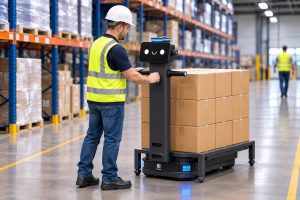
- Pudu T600: An industrial robot designed to move heavy materials in manufacturing and warehouse environments.
Each robot is designed for specific tasks and workplace environments.
Before choosing a solution, businesses should consider what they want the robot to do, how often the task needs to be performed, and whether their facility can accommodate the equipment.
A facility assessment or demonstration can help determine which robots are suitable and how they would work in that environment.
Next Steps: See Workplace Robotics in Action
Could a robot handle some of the cleaning, deliveries, or material movement taking up your employees’ time? A demonstration can help you see how the technology works and whether it’s suitable for your facility.
At Pulse Technology, we help businesses throughout Illinois, Northwest Indiana, and Southeast Wisconsin explore robotics solutions that match their workplace requirements.
Ready to explore your options? Contact Pulse Technology to discuss your needs or arrange a demonstration.
If you’re curious about workplace robotics, watch our webinar replay, Workplace Robotics: Myth vs. Reality, featuring Pulse Technology’s Vince Miceli, to learn more about commercial robotics and its practical applications.
Frequently Asked Questions About Workplace Robotics
1. What tasks can workplace robots perform?
Commercial robots can handle specific tasks such as vacuuming, sweeping, floor scrubbing, delivering supplies, and transporting materials. Capabilities depend on the equipment and environment.
2. Can small businesses benefit from workplace robotics?
Yes, depending on their requirements. Smaller businesses with frequent cleaning, delivery, or material-handling tasks may benefit. A facility assessment can help determine whether the investment makes sense.
3. Do workplace robots require employees to supervise them?
Many commercial robots perform scheduled tasks autonomously but still require human oversight. Employees may need to prepare work areas, replenish supplies, address interruptions, and maintain equipment.